
UBOS Unveils New Data Frameworks to Drive Uganda’s Tenfold Economic Growth Ambition
Uganda is strengthening its national statistical systems as UBOS unveils three strategic frameworks aimed at improving evidence-based planning, curbing manipulation of public data and strengthening accountability. The reforms are expected to support the country's tenfold economic growth ambition by ensuring public resources and development policies are guided by accurate and reliable statistics.
KAMPALA — The Uganda Bureau of Statistics (UBOS) has unveiled three strategic frameworks aimed at strengthening the country's statistical systems, improving public accountability and ensuring national development programmes are guided by reliable evidence as Uganda pursues its ambitious tenfold economic growth target.
The frameworks, launched during Africa Statistics Week 2026, are expected to reshape how government institutions collect, analyse, disseminate and utilise statistical information to guide public investment and national planning.
The documents include the Fourth Plan for National Statistical Development (PNSD IV), the UBOS Strategic Plan IV and the UBOS Service Delivery Standards.
The initiative comes amid growing calls for government ministries, departments and agencies to move away from relying on estimates and unverified figures when designing development programmes, allocating resources and measuring performance.
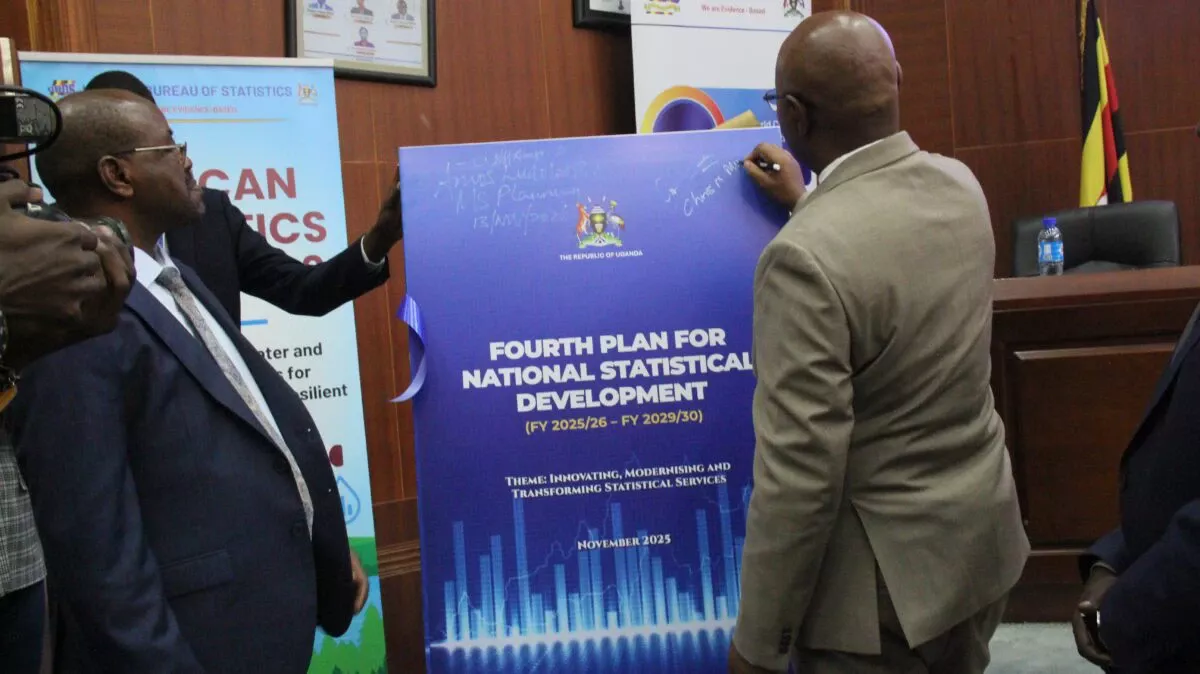
State Minister for Finance and Planning Amos Lugoloobi said reliable statistics have become increasingly important in Uganda's development journey, recalling that during the country's earlier planning years, authorities often relied on rough estimates and external data sources to formulate national development plans.
He challenged government institutions to embrace evidence-based planning, warning that inaccurate or deliberately inflated statistics could distort budgets and undermine the effectiveness of public programmes.
Lugoloobi cited instances where individuals exaggerate the number of beneficiaries expected to receive services, resulting in unrealistic targets and potentially misdirected public resources.
“At times people use figures to obtain their own interests deceptively. For example, someone says, ‘we are going to serve 5,000 people,’ yet the area has only a few people. We need to have the right figures for what we are going to do,” Lugoloobi said.
He urged ministries and government agencies to integrate verified statistics into their planning processes while embracing emerging technologies, including artificial intelligence and big data analytics, to improve the collection and application of information.
UBOS Executive Director Dr. Chris Mukiza said statistics should be regarded as a strategic national asset rather than a routine administrative requirement, noting that accurate information is essential for measuring development progress and ensuring resources reach their intended beneficiaries.
The new frameworks are aligned with Uganda's Fourth National Development Plan (NDP IV), the United Nations Sustainable Development Goals and the African Union's Agenda 2063.

They are intended to strengthen coordination across the national statistical system, improve institutional performance and make official statistics more accessible and useful to policymakers, businesses, researchers and the public.
Thomas Rutaro, UBOS Director for Methodology and Statistical Coordination Services, said the new service delivery standards would provide a mechanism through which the public and other stakeholders can assess the Bureau's performance against its commitments.
“The service delivery standards and guidelines will help us deliver the outputs we have highlighted in the strategic plan. They will enable you to hold us accountable on what we promise to deliver,” Rutaro said.
The Bureau is also working to improve public access to official statistics through digital platforms.
Principal Officer Ivan Kanyeheyo highlighted the importance of clear response timelines in ensuring that UBOS remains responsive to the changing needs of data users, while Head of Digital Solutions Ivan Atwiine said citizens, investors and researchers can access official statistical information through the Bureau's online data dissemination portal.
Beyond economic planning, UBOS is using Africa Statistics Week to highlight how reliable data can address pressing social and environmental challenges, particularly access to safe drinking water, sanitation and climate resilience.
During a media briefing, Deputy Executive Director Dr. Vincent Fred Ssenono, representing Dr. Mukiza, pointed to findings from the 2022 Uganda Demographic and Health Survey showing that although more than 80 per cent of households obtain water from improved sources, approximately 89 per cent remain at risk of waterborne diseases associated with contaminated drinking water.
The risk is even higher in rural communities, where the proportion rises to 93 per cent.
Ssenono explained that the figures demonstrate why measuring access to water alone is insufficient without examining its quality and safety.
To address information gaps, UBOS has partnered with local governments to develop a digital application that maps and georeferences water sources across districts, enabling authorities to identify their locations and make better-informed decisions when planning water and sanitation investments.
The initiative is expected to help local authorities identify underserved communities, prioritise interventions and monitor the distribution of essential services.
As part of the Africa Statistics Week 2026 celebrations, UBOS has organised a series of public engagement activities, including a seminar for statistics professionals, a students' symposium, a sports gala, blood donation drives and tree-planting campaigns.
The activities are intended to promote statistical literacy, encourage young people to appreciate the importance of data in public policy and strengthen public participation in national development.
As Uganda pursues its tenfold economic expansion ambition, the effectiveness of these new frameworks will depend on how well institutions translate reliable statistics into better planning, transparent public spending and measurable improvements in citizens' lives.

Benjamin Mwibo is a talented, passionate and creative journalist with a commitment to high quality out put that is factual and researched. Above all Dedicated with a strong desire to identify the truth of the matter.

















Comments (0)