
Mudoma Presents Dual-Direction Growth Model, Calls for Formal Recognition of Traditional Leaders in African Union Governance
Presenting a paper titled “The Dual-Direction Growth Model: Synthesizing Sovereignty, Science, and Traditional Governance for Agenda 2063” at the African Traditional Leaders Forum (ATLF) in Addis Ababa, Ethiopia, Mudoma challenged African governments and continental institutions to recognise traditional leaders as strategic partners in governance, peacebuilding and development.
Addis Ababa, Ethiopia-
His Royal Highness Sir Jude Mike Mudoma III, the Umukuuka (King) Wa Bugisu, has called for greater integration of traditional leadership, indigenous knowledge systems and cultural institutions into Africa's governance structures, arguing that sustainable peace, political stability and development cannot be achieved without strong foundations rooted in African culture.
Presenting a paper titled “The Dual-Direction Growth Model: Synthesizing Sovereignty, Science, and Traditional Governance for Agenda 2063” at the African Traditional Leaders Forum (ATLF) in Addis Ababa, Ethiopia, Mudoma challenged African governments and continental institutions to recognise traditional leaders as strategic partners in governance, peacebuilding and development.
The presentation, delivered under the theme “Culture is a Foundation for Peace and Governance,” explored the relationship between modern state institutions and traditional governance systems, drawing on the biological processes of plant growth to demonstrate why Africa needs a balanced governance architecture.
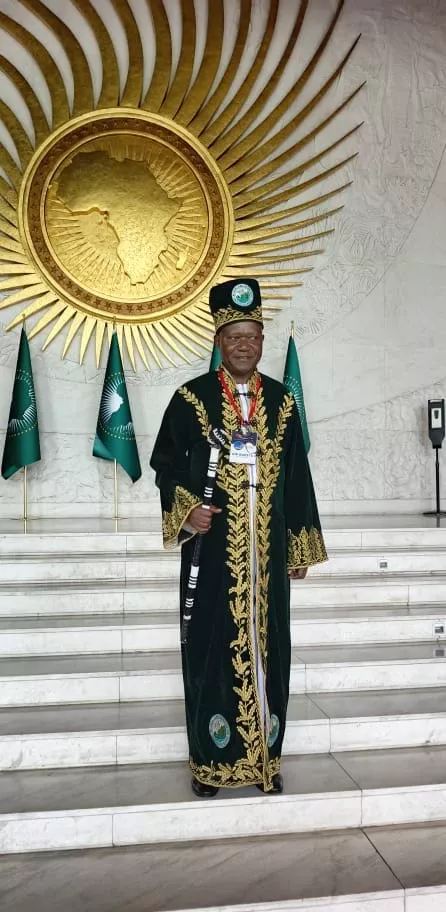
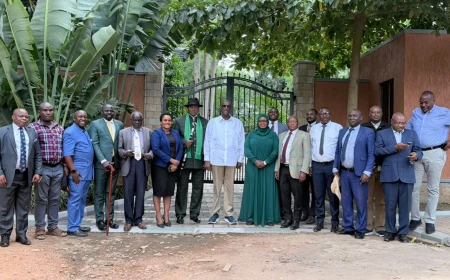
Addressing an audience comprising representatives of the African Union Commission, political leaders and traditional rulers from across the continent, Mudoma argued that Africa's governance systems have for decades placed considerable emphasis on modern institutions while paying insufficient attention to the cultural foundations and indigenous structures that sustain communities.
He observed that although African countries have developed formal legal, economic and political institutions modelled around international governance frameworks, these structures sometimes remain disconnected from the cultural realities, historical experiences and social structures of the populations they serve.
According to Mudoma, this disconnect creates institutional weaknesses that undermine public trust, weaken community participation and complicate efforts to achieve lasting peace and sustainable development.
The science behind Africa's governance challenge
At the centre of Mudoma's presentation was the Dual-Direction Growth Model, an innovative governance framework inspired by the biological development of plants.
He explained that a healthy tree survives and grows through two complementary processes: the upward growth of its shoots towards sunlight and the downward development of its roots into the soil.
In his analogy, the shoot system represents modern governance institutions, including the African Union, regional economic communities, national governments, parliaments, statutory legislation, international diplomacy and technological advancement.
The root system, on the other hand, represents traditional African leadership, cultural institutions, indigenous knowledge systems, customary laws and community-based conflict-resolution mechanisms.
Mudoma argued that both systems are indispensable to the survival and stability of the African continent.
He explained that just as a tree cannot survive through its branches and leaves without a strong root system, modern African governance institutions cannot achieve lasting stability if they operate without meaningful connections to the cultural institutions and communities that provide their social foundations.
Similarly, traditional institutions must work alongside modern governance structures to ensure that cultural authority and indigenous knowledge contribute to contemporary development.
Using this comparison, the Umukuuka cautioned against governance approaches that concentrate exclusively on modern institutional development while neglecting traditional leadership structures.
He noted that a tree that invests all its resources in upward growth without developing strong roots becomes structurally vulnerable and can easily collapse when confronted with external pressure.
Conversely, a tree with an extensive root system but without a functioning shoot system cannot generate the energy required for growth.
He therefore advocated for a governance model in which modern institutions and traditional leadership develop together, complementing each other's responsibilities to strengthen Africa's political, social and economic foundations.
Traditional leaders as foundations of peace and stability
Translating the scientific analogy into Africa's political and governance environment, Mudoma identified traditional institutions as important custodians of community stability, cultural heritage and indigenous knowledge.
He argued that kings, cultural leaders and traditional rulers possess deep-rooted relationships with their communities, giving them an important role in addressing disputes, preserving communal values and promoting peaceful coexistence.
According to the presentation, traditional institutions also possess valuable experience in customary conflict resolution, communal land management, historical mediation and the preservation of knowledge passed down through generations.
These responsibilities, he suggested, make traditional leaders important partners in addressing some of the challenges confronting African societies, particularly localised conflicts, land disputes, resource competition and tensions arising from competing community interests.
Mudoma maintained that modern state institutions should not operate independently of these established cultural structures but should create appropriate mechanisms for cooperation.
He argued that Africa's pursuit of political stability and institutional resilience requires governance systems that are not only legally recognised but also socially accepted and firmly anchored in the communities they serve.
Applying the principle of hormonal balance to governance
In another dimension of his presentation, Mudoma introduced the concept of auxin regulation, a biological process through which plants coordinate their growth in response to different environmental conditions.
He explained that auxin, a plant hormone, influences cell elongation differently in shoots and roots, enabling plants to respond appropriately to their surroundings.
He used this process to illustrate the importance of flexibility and context-sensitive policymaking in African governance.
According to Mudoma, continental and national development policies should not be implemented uniformly without considering the different cultural, historical and social circumstances of local communities.
He observed that while statutory institutions may need to move quickly in areas such as digital transformation, technological innovation, international trade and regional integration, traditional institutions require sufficient flexibility and space to address historical disputes, community concerns, cultural preservation and communal land issues.
He argued that development should not be pursued at a pace that alienates communities or undermines their cultural identity.
Instead, he called for a coordinated approach in which modern development priorities are harmonised with local realities through continuous consultation between governments and traditional leadership institutions.
Building institutional resilience through indigenous knowledge
The Umukuuka also drew attention to another biological concept, thigmomorphogenesis, which describes how plants strengthen and modify their physical structures in response to repeated mechanical stress.
He related this process to the development of resilient governance institutions capable of responding to social, political and economic challenges.
Mudoma argued that African societies have accumulated generations of indigenous knowledge and practical experiences in managing difficult circumstances, resolving disputes and maintaining communal relationships.
He proposed that these experiences should inform the development of stronger national and continental governance systems.
According to his presentation, Africa should not overlook its traditional institutions when designing strategies to address emerging challenges, including environmental degradation, competition over natural resources and community displacement.
He emphasised that indigenous knowledge systems are valuable assets that can complement modern science, legislation and development planning.
Three-point proposal to the African Union
Moving from the theoretical framework to practical recommendations, Mudoma's presentation outlined three major proposals for consideration by the African Union Commission and other continental institutions.
The first was the establishment of a Permanent Council of Traditional Leaders within the African Union framework.
The proposed council would provide a formal platform through which traditional rulers and cultural institutions could participate in continental consultations on peace, security, cultural development and governance.
Under this arrangement, traditional leaders would have an institutionalised advisory role, allowing their perspectives and recommendations to inform major continental initiatives before implementation.
The second proposal was the integration of Indigenous Knowledge Systems into the African Peace and Security Architecture (APSA).
Mudoma called for the recognition and utilisation of customary conflict-resolution mechanisms, with kings, chiefs and other traditional leaders playing a more active role in mediating disputes and promoting reconciliation within their communities and across borders.
He argued that traditional institutions could strengthen peacebuilding efforts by drawing on their established relationships with local populations and their understanding of historical and cultural dynamics.
The third proposal focused on coordinated resource mobilisation and partnerships between governments and traditional institutions.
Mudoma called for formal financial and structural partnerships to support community-level development programmes, including infrastructure development, agricultural value addition and environmental conservation.
He particularly highlighted opportunities in agricultural value chains, such as coffee production and processing, as areas where traditional institutions could help mobilise communities and support sustainable economic transformation.
The proposal seeks to ensure that traditional institutions are not merely recognised as custodians of culture but are also involved in practical initiatives that improve livelihoods and strengthen local economies.
Advancing the aspirations of Agenda 2063
Mudoma's presentation positioned the Dual-Direction Growth Model as a framework for advancing the African Union's Agenda 2063, which envisions an integrated, prosperous and peaceful Africa driven by its own citizens and capable of playing a significant role in the global arena.
He argued that achieving this vision requires more than the establishment of modern institutions, the expansion of infrastructure and the adoption of international development frameworks.
Africa must also strengthen the cultural, historical and community foundations upon which its development aspirations depend.
The presentation called for a governance philosophy that combines scientific advancement, modern state institutions, African sovereignty and traditional leadership.
By linking indigenous knowledge with contemporary governance, Mudoma maintained that African countries could develop institutional arrangements that are more responsive to local communities while remaining connected to continental and international development priorities.
His argument was that Africa's cultural heritage should not be treated as an obstacle to modernisation but as an important resource for building stronger, more inclusive and sustainable societies.
A call for a united African governance approach
The presentation at the African Traditional Leaders Forum placed traditional leadership at the centre of discussions about Africa's future governance architecture.
Mudoma's central message was that the continent cannot achieve sustainable peace and development by strengthening its visible political and administrative institutions while neglecting the cultural foundations that sustain its communities.
He advocated for a partnership in which the African Union, national governments and traditional institutions work together, with each contributing its unique strengths to continental transformation.
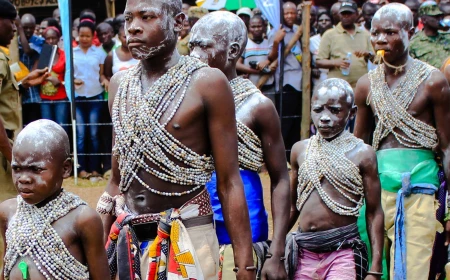
For the Bugisu Kingdom, the presentation also provided an opportunity to contribute to a wider African conversation on the relevance of cultural institutions in addressing contemporary governance challenges.
Representing the traditional leadership institution of Bugisu at the continental gathering, Mudoma advanced the argument that Africa's development journey must be firmly grounded in its identity, indigenous knowledge and established cultural structures.
The Dual-Direction Growth Model ultimately presents a compelling proposition: just as a tree requires strong roots and healthy shoots to grow, Africa needs a balanced relationship between modern governance institutions and traditional leadership to achieve lasting peace, stability and prosperity.
Through this approach, Mudoma called on the African Union and its member states to move beyond symbolic recognition of traditional rulers and establish practical institutional partnerships that harness their contribution to the continent's long-term transformation.

John Kusolo is a Pastor, Sports Enthusiast and Ugandan journalist with Nile Chronicles News (NCN). With a strong commitment to journalistic excellence, he is recognized for his dedication, goal-oriented approach, and ability to thrive in challenging environments. Kusolo brings focused motivation and professionalism to his reporting and media assignments.











Comments (0)