
Umukuuka Mudoma Pushes for African House of Kings, Calls for Culture-Driven Governance and Peace
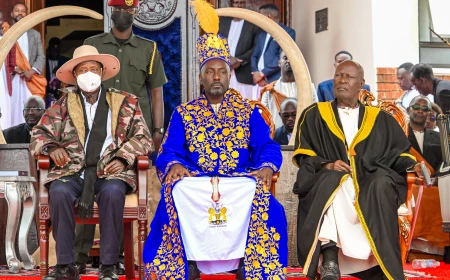
His Royal Highness Sir Jude Mike Mudoma III, the Umukuuka wa Bugisu, has called for the establishment of a Traditional Leaders’ Apex Body and a Regional House of Kings across Africa to strengthen cultural cooperation, promote peace and improve governance on the continent.
Addis Ababa, Ethiopia-
His Royal Highness Sir Jude Mike Mudoma III, the Umukuuka wa Bugisu, has called for the establishment of a Traditional Leaders’ Apex Body and a Regional House of Kings across Africa to strengthen cultural cooperation, promote peace and improve governance on the continent.
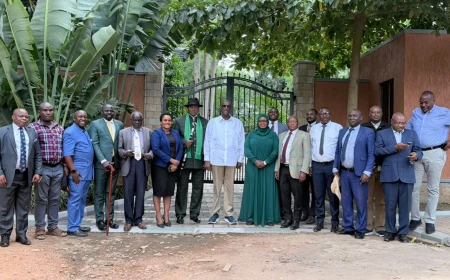
Mudoma made the proposal while delivering a speech at the African Traditional Leaders Conference held at the African Union (AU) Headquarters in Addis Ababa, Ethiopia, from November 10 to 15, 2026.
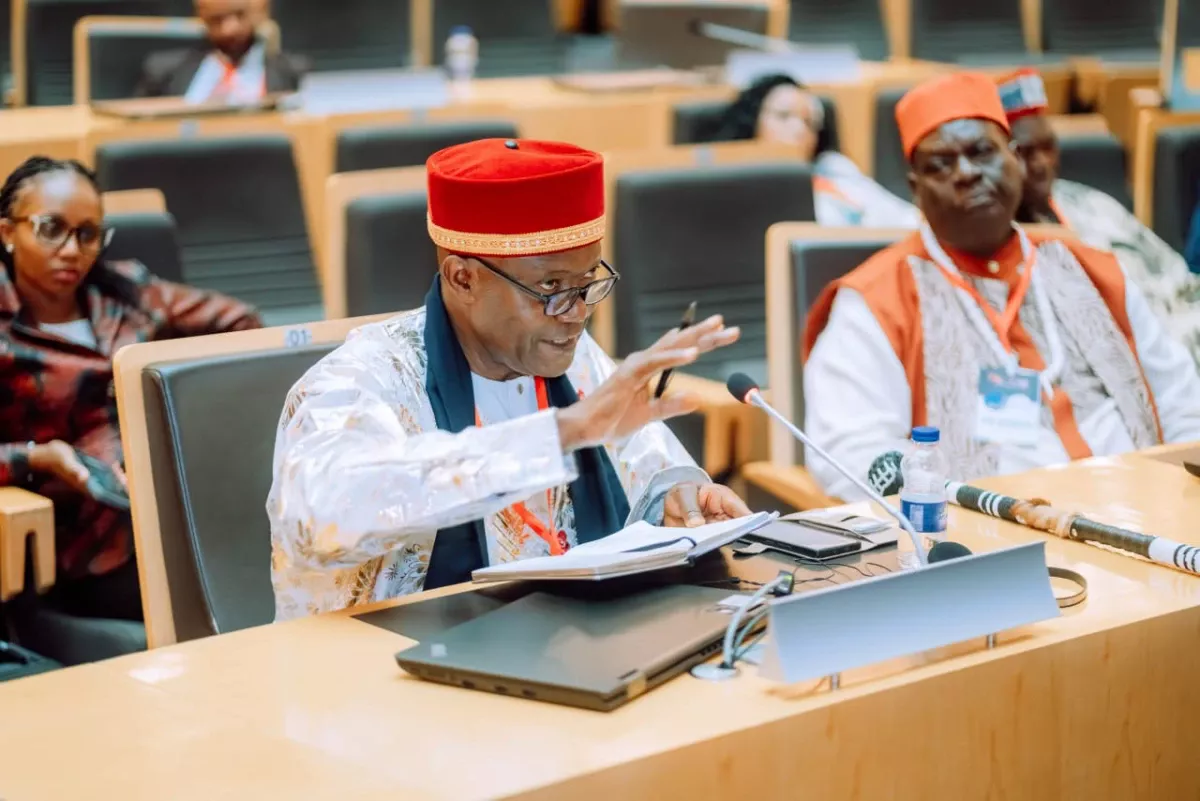
The conference, held under the theme “African Culture, Indigenous Knowledge Systems (IKS), and Natural Resources,” addressed the specific topic “Culture is a Foundation for Peace and Governance.”
In his address, the Umukuuka urged African governments to recognise traditional institutions as important partners in governance, environmental conservation, conflict resolution and sustainable development.
He argued that Africa's efforts to achieve lasting peace and self-reliance must be rooted in its indigenous cultural values rather than relying exclusively on imported governance models.
“Culture is not an ornament to be displayed at festivals; it is the structural foundation upon which sustainable peace and resilient governance must be built across Africa,” Mudoma said.
He introduced himself as a representative of the Bagisu/Bamasaaba and Babukusu cultural fraternity from the slopes of Mount Elgon, describing the communities as an interconnected cultural family whose historical and ancestral ties extend across Uganda and Kenya.
He said cultural connections remain stronger than modern political boundaries and should be recognised as an important foundation for African unity and regional integration.
Traditional institutions as partners in governance
Mudoma observed that many African countries continue to experience challenges because formal state governance structures are often disconnected from the cultural realities and indigenous systems of their communities.
He maintained that traditional institutions possess established community structures, moral authority and indigenous knowledge that can complement modern government systems.
Using examples from across Africa, he highlighted the Shona and Ndebele communities of Zimbabwe, whose Chisi taboos and sacred forests have traditionally helped protect water catchment areas and biodiversity.
He also cited the Kaya forests of Kenya's Mijikenda communities, where traditional councils of elders have played a role in protecting forests and managing natural resources.
In Lesotho, he pointed to the Basotho Maboella system, which uses traditional leadership and customary regulations to manage rotational grazing and protect fragile mountain ecosystems.
Turning to Bugisu, Mudoma explained that indigenous knowledge among the Bamasaaba had historically guided communities in managing the Mount Elgon ecosystem, protecting water channels and maintaining the relationship between people and their natural environment.
He called for such indigenous practices to be incorporated into contemporary government policies, arguing that traditional knowledge can contribute to climate resilience, environmental protection and sustainable resource management.
Calls for traditional justice systems to complement formal courts
The Umukuuka further proposed the integration of clan-based mediation structures into national judicial systems to strengthen access to justice and resolve community disputes.
He explained that clan structures in Bugisu remain active institutions that help mediate conflicts and promote reconciliation among communities.
According to Mudoma, traditional justice mechanisms can provide restorative solutions to local disputes, particularly where adversarial court processes may be inaccessible or alienate grassroots communities.
He said cultural leadership promotes consensus-building and reconciliation, helping communities resolve disagreements without deepening social divisions.
Mudoma therefore urged African governments to develop frameworks that formally recognise traditional mediation structures while maintaining their relationship with national legal systems.
Proposes State Technical Guardianship for retired professionals
Addressing the preservation of indigenous knowledge and professional experience, Mudoma proposed a new framework he described as “State Technical Guardianship.”
He said African countries should reconsider the conventional understanding of retirement, which often results in experienced professionals leaving active service without adequately transferring their knowledge to younger generations.
Under the proposed framework, retired professionals, elders and holders of specialised technical knowledge would be recognised as institutional guardians responsible for mentoring young people and preserving valuable expertise.
He suggested that the initiative could be coordinated through government ministries responsible for social development.
Mudoma said the arrangement would help protect Africa's intellectual heritage, strengthen intergenerational knowledge transfer and prevent the loss of technical experience accumulated over decades.
He emphasised that elders should continue contributing to national development through structured mentorship and advisory responsibilities even after leaving formal employment.
Wants cultural institutions involved in Mount Elgon disaster relocation
On environmental protection and climate change, Mudoma highlighted the devastating effects of landslides on communities living along the slopes of Mount Elgon.
He said the experiences of the Bugisu region demonstrate that environmental protection and disaster management cannot depend entirely on government directives without meaningful community participation.
He explained that traditional institutions have an important role in mobilising communities, addressing cultural concerns and building public confidence in government-led disaster interventions.
Mudoma revealed that following strategic engagements with the Prime Minister, the Bugisu cultural institution had resolved to participate actively in sensitising and mobilising landslide-affected communities for relocation.
He said traditional leaders, clan heads and cultural structures could help address fears associated with leaving ancestral lands and explain the importance of relocating people from disaster-prone areas.
He consequently called on governments to provide traditional institutions with the necessary logistical support to participate in natural resource management, environmental awareness and disaster relocation programmes.
He maintained that cooperation between government agencies and cultural institutions would improve community participation and make environmental interventions more effective.
Proposes one-hour daily cultural and character education in schools
The Umukuuka also raised concerns about declining discipline, weakened social values and the growing disconnection between African youth and their cultural heritage.
He proposed a continental educational reform requiring schools and universities to dedicate one hour of every daily learning session to character development, personal discipline, integrity, patriotism and environmental stewardship.
He said the proposed curriculum should be jointly developed by governments and cultural institutions to ensure that indigenous values become an integral part of formal education.
According to Mudoma, introducing structured cultural and character education from nursery school to university would help nurture responsible citizens who respect public resources, value their heritage and contribute to peaceful communities.
He argued that education should go beyond academic qualifications to include the development of ethical values and a strong sense of responsibility towards society.
Wants African wealth protected through value addition
On economic sovereignty, Mudoma challenged African countries to increase investment in local processing and value addition instead of continuing to export raw agricultural and natural resources.
Using Bugisu Arabica coffee as an example, he observed that although the region produces premium coffee, much of the economic value is captured further along foreign processing and marketing chains.
He called for increased institutional investment in irrigation systems, water harvesting and gravity-flow schemes to strengthen agricultural production and protect farmers against climate-related disruptions.
He also advocated for the construction of thousands of kilometres of tarmacked tourism and feeder roads to connect agricultural production areas and cultural tourism sites to wider markets.
Mudoma said infrastructure development, agricultural modernisation and local processing would enable African communities to benefit more directly from the resources they produce.
He further emphasised the importance of embracing digital technology to protect and commercialise indigenous innovations, traditional medicines, agricultural knowledge and cultural intellectual property.
He cited the Umukuuka Institute for Governance, Culture and Leadership as part of the efforts aimed at strengthening grassroots digital connectivity and promoting the preservation of indigenous knowledge.
He called for digital copyright protection and appropriate commercial frameworks to ensure that African communities retain ownership and benefit from innovations developed through their traditional knowledge systems.
Calls for African monarchs to establish a continental apex body
In his concluding remarks, Mudoma called for the creation of a formal Traditional Leaders’ Apex Body and a Regional House of Kings to strengthen cooperation among African monarchs and traditional institutions.
He said such an arrangement would provide a platform for cultural leaders to address common challenges, promote peace and support regional integration beyond modern political boundaries.
He particularly pointed to the historical and cultural connections between the Bagisu/Bamasaaba and Babukusu communities in Uganda and Kenya as an example of how cultural relationships can strengthen cooperation between neighbouring countries.
Mudoma argued that an institutionalised continental council of monarchs would provide a framework for intergenerational leadership, cultural diplomacy and sustained cooperation among traditional institutions.
He said the proposed structures could also support wider integration initiatives, including the East African Federation and the African Union's Agenda 2063.
“The colonial borders that divide our natural resources and separate our peoples were drawn without our consent. Cultural fraternities, like that of the Bagisu/Bamasaaba and Babukusu, run deeper than any passport or boundary,” he said.
He urged traditional leaders to use the Addis Ababa conference to develop practical policies that would strengthen cultural institutions, promote environmental sustainability and advance Africa's development agenda.
Culture at the centre of Africa's development agenda
Mudoma's presentation placed traditional leadership at the centre of discussions on Africa's future governance, peacebuilding and economic transformation.
His proposals covered the integration of indigenous justice systems into formal governance, community participation in environmental management, the preservation of professional knowledge, cultural education, agricultural value addition and digital protection of indigenous intellectual property.
He maintained that Africa's development agenda would be more sustainable if governments recognised and worked with the cultural institutions that continue to influence community identity, social organisation and traditional resource management.
The Umukuuka concluded by calling on African traditional leaders to strengthen their collective voice and ensure that indigenous knowledge and cultural heritage are reflected in continental development policies.
He reaffirmed the importance of cultural unity in building a peaceful and self-reliant Africa, ending his address with blessings for the Bugisu Kingdom, the Republic of Uganda and the African continent.

John Kusolo is a Pastor, Sports Enthusiast and Ugandan journalist with Nile Chronicles News (NCN). With a strong commitment to journalistic excellence, he is recognized for his dedication, goal-oriented approach, and ability to thrive in challenging environments. Kusolo brings focused motivation and professionalism to his reporting and media assignments.










Comments (0)