
UMUKUUKA WA BUGISU PRESENTS TWO POLICY PAPERS AT AFRICAN TRADITIONAL LEADERS FORUM IN ADDIS ABABA
In a significant engagement bringing together traditional leaders and other stakeholders from across Africa, the Umukuuka is presenting two major policy papers focusing on African sovereignty, traditional governance, indigenous knowledge systems, culture and sustainable development.
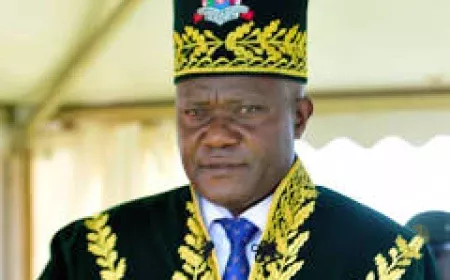
The Umukuuka wa Bugisu, His Royal Highness Sir Jude Mike Mudoma III, has taken Bugisu's cultural heritage and intellectual contributions to the continental stage in Addis Ababa, Ethiopia, where he is representing Bugisu and Uganda at the African Traditional Leaders Forum Conference held at the African Union (AU) Headquarters.
In a significant engagement bringing together traditional leaders and other stakeholders from across Africa, the Umukuuka is presenting two major policy papers focusing on African sovereignty, traditional governance, indigenous knowledge systems, culture and sustainable development.
In a message to the people of Bugisu from Addis Ababa, the cultural leader emphasised that his participation was not a tourism visit but a responsibility to represent his people and ensure that Bugisu's voice is heard in discussions shaping Africa's future.
"I have not come here as a tourist. I have come here as your voice – your Umukuuka – to present TWO papers on behalf of Bugisu, Uganda, and East Africa in Addis at the Headquarters of AU in the African Traditional Leaders Forum Conference before the entire African Continent," he stated.
Two papers to shape Africa's governance and development agenda
The first paper, titled "The Dual-Direction Growth Model: Synthesizing Sovereignty, Science and Traditional Governance for Agenda 2063," includes an Executive Policy Brief on Re-harmonising African Governance Structures.
The paper explores the importance of integrating African sovereignty, scientific knowledge and traditional governance systems into a coherent development framework that responds to the continent's aspirations.
It advances the argument that Africa's development should not be based solely on adopting governance models from elsewhere, but should also draw strength from its own institutions, knowledge systems and cultural foundations.
Through this approach, traditional governance structures are presented as important partners in strengthening leadership, promoting social cohesion and contributing to Africa's long-term development ambitions under the African Union's Agenda 2063.
The second paper, titled "African Culture, Indigenous Knowledge Systems (IKS) and Natural Resources," examines the relationship between cultural heritage, indigenous knowledge and the sustainable utilisation of Africa's natural resources.
The paper positions African culture as more than folklore or ceremonial practices, arguing that indigenous knowledge represents an important body of experience and expertise that can contribute to scientific advancement, environmental conservation, resource management and sustainable development.
It also highlights the importance of recognising natural resources as strategic assets whose management should benefit African communities while preserving their heritage for future generations.
Putting Bugisu on the continental stage
The Umukuuka described the conference as a major opportunity for Bugisu to demonstrate its intellectual capacity, cultural relevance and contribution to continental policy discussions.
He noted that Bugisu's participation provides an opportunity to showcase the region's heritage and demonstrate how traditional institutions can contribute to conversations on peace, governance, economic transformation and sustainable development.
According to the cultural leader, the engagement is also about ensuring that African cultural institutions are not merely recognised for preserving traditions but are actively involved in shaping policies that influence the continent's future.
He expressed confidence that Bugisu's participation would strengthen its visibility and recognition within wider African and international engagements.
A call for unity and visionary leadership
In his message, the Umukuuka also used the Addis Ababa engagement to emphasise the importance of focused leadership, unity and meaningful representation.
He contrasted policy engagement and intellectual contributions with internal disagreements and unproductive rhetoric, arguing that cultural leadership should be measured by the ability to deliver meaningful results for the people.
"This is what focused and visionary leadership looks like. Not noise. Not infighting. Not empty rhetoric. But Bugisu seated at the high table of Africa Continent shaping policy, shaping Agenda 2063, shaping the future," he said.
His message comes amid growing conversations across Africa about the role of traditional institutions in modern governance, the preservation of indigenous knowledge and the need to make cultural heritage an integral part of development planning.
Bugisu's cultural heritage and Africa's future
Bugisu, through its cultural institution under the leadership of the Umukuuka, has continued to emphasise the importance of preserving Bamasaaba identity, strengthening cultural values and promoting the region's contribution to national and continental development.
The Addis Ababa engagement provides another platform for presenting these aspirations within a broader African framework.
By taking two policy papers to the African Traditional Leaders Forum, the Umukuuka is seeking to position cultural institutions as contributors to policy formulation rather than simply custodians of traditional ceremonies and customs.
He concluded his message by reaffirming his commitment to representing the people of Bugisu with pride and honour, while calling upon them to support his participation and pray for the success of the engagement.
"I carry your name with pride. I carry your heritage with honour. And I will deliver for you. Pray for me. Stand with me. Bugisu is rising," he declared.
The participation of the Umukuuka in the continental conference underscores the importance of giving African traditional institutions a voice in conversations about governance, cultural identity, indigenous knowledge and the continent's development priorities.
For Bugisu, the message from Addis Ababa is one of representation, intellectual contribution and the ambition to see its cultural heritage recognised as part of Africa's collective future.

John Kusolo is a Pastor, Sports Enthusiast and Ugandan journalist with Nile Chronicles News (NCN). With a strong commitment to journalistic excellence, he is recognized for his dedication, goal-oriented approach, and ability to thrive in challenging environments. Kusolo brings focused motivation and professionalism to his reporting and media assignments.














Comments (0)